|
Usha has written in detail about our four-day trip.(You can read it by clicking here) I will only add a few impressions of mine.
When to visit Badri
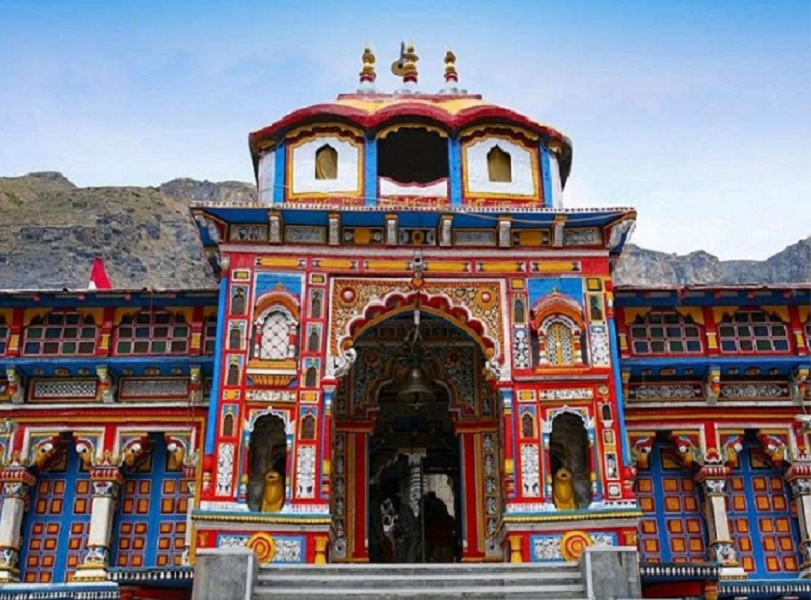
Of all the Divya Desams, the toughest to visit even now are Muktinath and Badrinath. Since they are in the Himalayas, the visits can be planned only in three months in the year (excluding winter when the temple is closed and the monsoon when land-slides are frequent). Even then the weather-gods can be truant. Tirumangai Azhwar who has sung about Badrinath writes, ‘Visit Badri before you are old, holding a walking stick and coughing and being derided by youngsters.’ Take this advice and visit Badri when you are young. As for the time of the year, both May-June and September-October have their advantages. But I feel September (a few days after Vinayaka Chaturthi) is the best time to visit Badri. But plan well in advance and do the bookings. Else, you will be surprised by the huge crowd in Badri. The best way to have a darshan at Badri is to reserve the Maha Abhishek Puja (Rs. 4630/ per head in 2022). I have written in detail in Part - I of this article about this divine experience.
Green Card and Trip Card
After the floods in 2013, Uttaranchal Government has taken steps to regulate travel to the Chardaam (Badrinath, Kedarnath, Gangotri and Yamunotri). One of them is the introduction of Green Card for every vehicle and Trip card for the persons in the vehicle. The tour operators would be aware of this but our vehicle was arranged through her contacts by Usha and the driver seemed to be unaware of the procedure. What should have been a 30-minutes wait at the Rishikesh RTO stretched to three hours. Fortunately our plans did not have to undergo change though there was some tension till we reached Devprayag. But as I always say, all’s well that ends well.
Border Roads Organisation
The entire chardham route is of strategic significance and the road right from Rishikesh to Badrinath is constructed and maintained by Border Roads Organisation. Now there is a 2-lane road with proper shoulder (to prevent accidents). Of course nature’s fury has to be combated frequently as landslides are common. Till a few years ago the traffic would be blocked for hours and even days if a landslide occurred. But in our visit in 2022, we saw that the JCBs and road rollers are kept every few kilometres and landslides are cleared within a few hours to restore single-lane traffic. Kudos to BRO, which is an unsung hero.
Hotels and Food
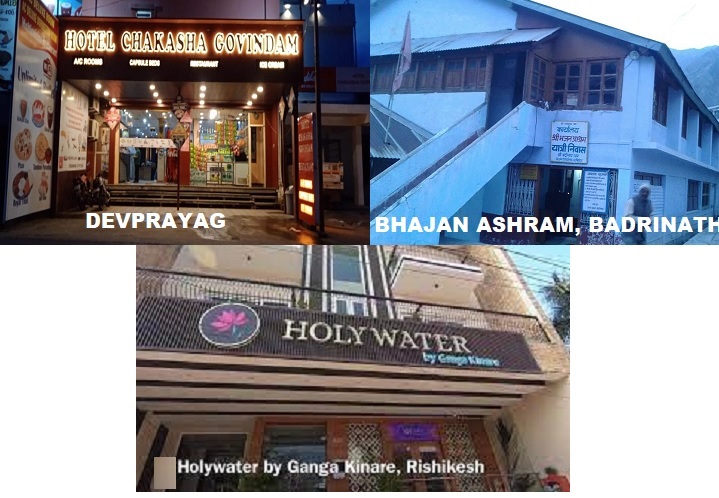 When I went to Badrinath, Kedarnath and Gangotri in 1994, there were not many hotels and restaurants en route. In 2022, we saw that the entire route has a lot of well-equipped hotels. For example, Chakasha Govindham in Dev Prayag where we stayed (about Rs. 4000/- per day for double-room) was as good as 3-star accommodation with 24-hour electricity, AC and wi-fi with a speed of 30 mbps. The staff went out of the way to make us comfortable. Sourabh offered to heat our home-made chapathis and he got up at 3.30 AM to supply hot milk for us. During the Yatra season, all the hotels in Char Dham serve only vegetarian food and getting Jain food (no onion, no garlic) is not a problem at all. Even the roadside dhabhas serve excellent food. In Joshimath, we had lunch in a dhaba. Hot and tasty chapathi, dal and rice were made in our presence. With most places storing curd and pickles, the meal was always complete. If you visit Badri after the monsoon, you do not have to carry too much food with you. When I went to Badrinath, Kedarnath and Gangotri in 1994, there were not many hotels and restaurants en route. In 2022, we saw that the entire route has a lot of well-equipped hotels. For example, Chakasha Govindham in Dev Prayag where we stayed (about Rs. 4000/- per day for double-room) was as good as 3-star accommodation with 24-hour electricity, AC and wi-fi with a speed of 30 mbps. The staff went out of the way to make us comfortable. Sourabh offered to heat our home-made chapathis and he got up at 3.30 AM to supply hot milk for us. During the Yatra season, all the hotels in Char Dham serve only vegetarian food and getting Jain food (no onion, no garlic) is not a problem at all. Even the roadside dhabhas serve excellent food. In Joshimath, we had lunch in a dhaba. Hot and tasty chapathi, dal and rice were made in our presence. With most places storing curd and pickles, the meal was always complete. If you visit Badri after the monsoon, you do not have to carry too much food with you.
Since Usha had visited Badri previously, she chose a Yatri Niwas type accommodation in Badri (Bhajan Ashram). This proved to be a wise decision as it was just 200 metres from the temple. All star-hotels in Badri are quite far. Had we stayed in a fancy accommodation, we would have been very tired and the driver would have been even more tired. Here also, the manager was very friendly and allotted a room to the driver without asking for payment. Usha narrated her experience in a 5-star hotel which refused to allow the driver to use the rest-room and how she had to book a room for him elsewhere at her cost.
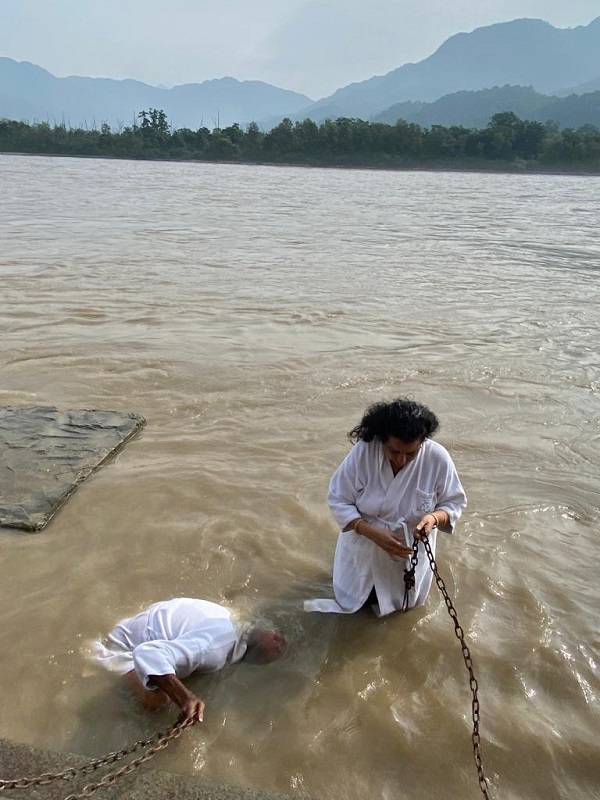 In Rishikesh, we stayed in Holy Water, Ganga Kinare. This is a sister hotel of Ganga Kinare which is on the banks of river Ganges. Usha had booked a family suite. It was good, but had a single bathroom for five persons. If this fact had been displayed while booking Usha would have booked two rooms. But the hotel made up for this lapse by two actions. In Rishikesh, we stayed in Holy Water, Ganga Kinare. This is a sister hotel of Ganga Kinare which is on the banks of river Ganges. Usha had booked a family suite. It was good, but had a single bathroom for five persons. If this fact had been displayed while booking Usha would have booked two rooms. But the hotel made up for this lapse by two actions.
1. providing the residents to use the private walkway along the ganges and the private ghat in Hotel Ganga Kinare. The hotel provides robe and towel and ensures safe bathing by providing a strong chain to hold on during bathing.(Usha, Jayanti and I had the dip in Ganges) and
2. by the excellent breakfast with a very wide choice.
I wrote that the Maha Abhishek Darshan was a fitting finale to my Divya Desam Yatra. The dip in the Ganga was a fitting finale to our four-day trip.

We had a number of cups of tea en-route and I was struck by the good tea that we got everywhere (with the right amount of ginger) right from Rishikesh to Mana. Usha had brought a big sachet of ID coffee decoction and we could have good coffee twice by ordering hot milk.
Mana
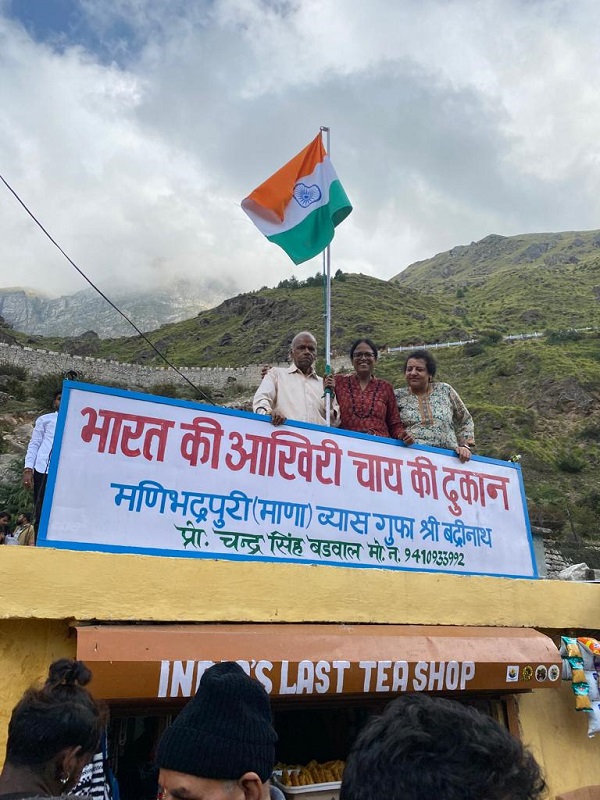 Mana is the northernmost village of India and a place which every pilgrim to Badri must visit. Apart from the geographical fact, there are places of religious significance. Mana is where the Pandavas walked past en route to heaven. Which explains the presence of the Bhim pul here — a rock bridge believed to be fashioned by Bhim to help Draupadi cross the mythical Saraswati river. There are also the Vyas and Ganesha caves, where Mahabharata was written.. Most people also want to take a picture with the national flag on top of the last tea shop in India. I was no exception. This last village was as crowded as Ranganathan Street of Chennai and had only slightly lesser number of shops than Ranganathan street. Mana is the northernmost village of India and a place which every pilgrim to Badri must visit. Apart from the geographical fact, there are places of religious significance. Mana is where the Pandavas walked past en route to heaven. Which explains the presence of the Bhim pul here — a rock bridge believed to be fashioned by Bhim to help Draupadi cross the mythical Saraswati river. There are also the Vyas and Ganesha caves, where Mahabharata was written.. Most people also want to take a picture with the national flag on top of the last tea shop in India. I was no exception. This last village was as crowded as Ranganathan Street of Chennai and had only slightly lesser number of shops than Ranganathan street.
Tamil
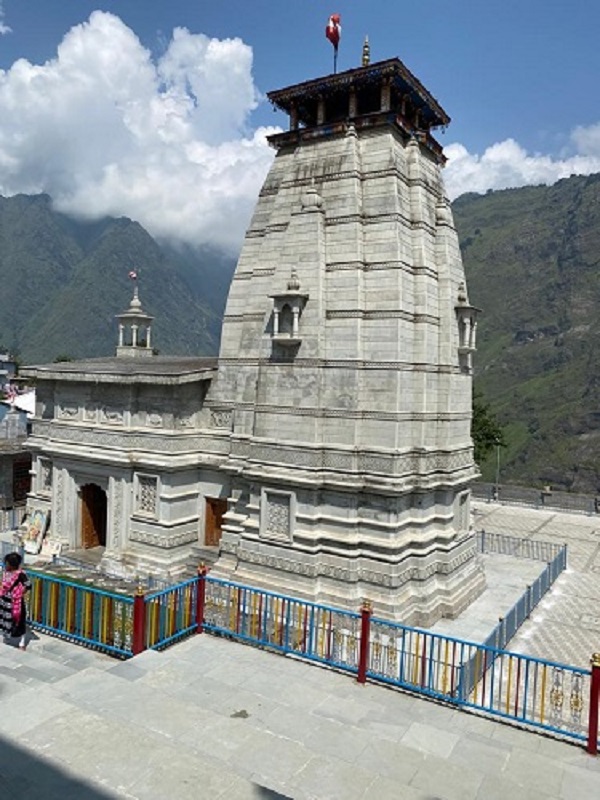
It was the search for the temples in Divya Prabhandham in Tamil that took us to these three Divya Desams. Yet it was a pleasant surprise to see the 10 Pasurams of Periazhwar inscribed on the walls of Shri Raghunathji Mandir in Dev Prayag (Purudothaman for Periazhwar). When we sat there and recited the Pasurams (and later in Narasimha Dev Temple, Joshimath (Tirupirithi for Tirumangai Azhwar), we could feel the unity in diversity. The pleasant surprise continued in Badri when we joined another group of Tamil pilgrims, who took the initiative, and started reciting Pallandu. Apart from these noble instances, Tamil was useful for us to discuss something which we did not want the driver to know.
Panch Prayag
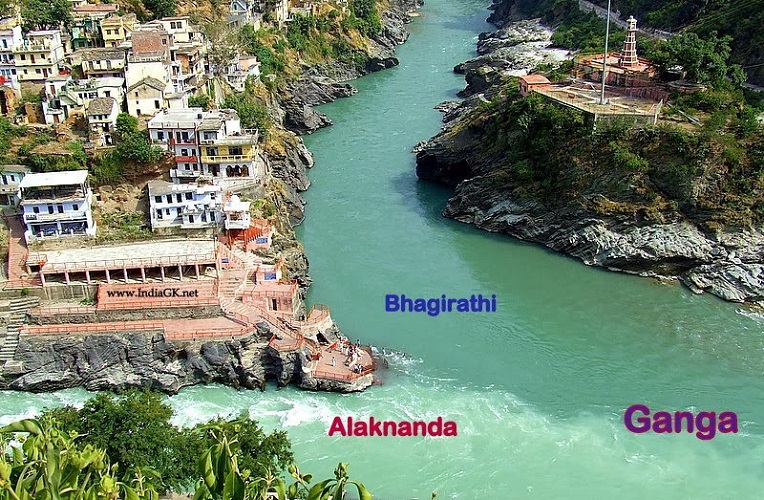 The Panch Prayag lie en route to Badrinath. Alaknanda River is joined by Dhauliganga River at Vishnuprayag. Nandaprayag is the second confluence where Alaknanda River is joined by Nandakini River. The third confluence of Alaknanda River is at Karnaprayag where Pindar River joins Alaknanda. Rudraprayag is the fourth confluence between Alaknanda and Mandakini River. The fifth and final union takes place at Devprayag where Alaknanda River joins Bhagirathi forming river Ganges, which flows down to the plains. We could visit only Dev Prayag. It is from Devprayag that Ganga earns her name. The merger of the furious Alakananda and peaceful Bhagirathi to form Ganga is truly a sight to behold. No photograph or video can give the same feeling that you get on seeing the two rivers. The Panch Prayag lie en route to Badrinath. Alaknanda River is joined by Dhauliganga River at Vishnuprayag. Nandaprayag is the second confluence where Alaknanda River is joined by Nandakini River. The third confluence of Alaknanda River is at Karnaprayag where Pindar River joins Alaknanda. Rudraprayag is the fourth confluence between Alaknanda and Mandakini River. The fifth and final union takes place at Devprayag where Alaknanda River joins Bhagirathi forming river Ganges, which flows down to the plains. We could visit only Dev Prayag. It is from Devprayag that Ganga earns her name. The merger of the furious Alakananda and peaceful Bhagirathi to form Ganga is truly a sight to behold. No photograph or video can give the same feeling that you get on seeing the two rivers.
A Day in Delhi
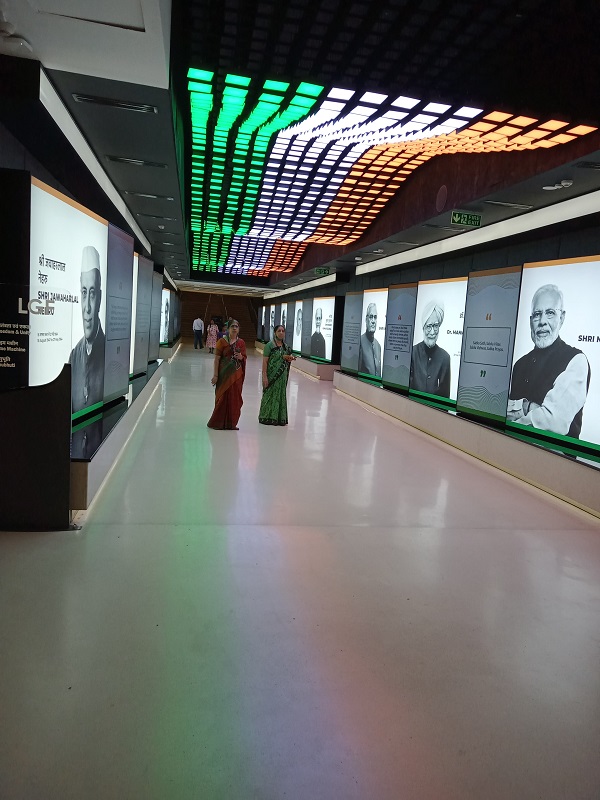 7thy September was an extremely busy and satisfying day. Air Vistara flight from Bangalore took off on the dot at 7 AM and reached Delhi a few minutesearlier than the scheduled arrival. We dumped our luggages in the room in Civil Services Officers' Institute, Chanakyapuri, a very posh accommodation which Mrs. Manjusha Jain, IRAS (who had worked with me in Western Railway, Mumbai) had booked. We headed straight to Prime Ministers' Museum in Teen Murthy Bhawan. This museum has been conceptualised and executed very well and is definitely worth a visit. After dropping Hema in the room, 7thy September was an extremely busy and satisfying day. Air Vistara flight from Bangalore took off on the dot at 7 AM and reached Delhi a few minutesearlier than the scheduled arrival. We dumped our luggages in the room in Civil Services Officers' Institute, Chanakyapuri, a very posh accommodation which Mrs. Manjusha Jain, IRAS (who had worked with me in Western Railway, Mumbai) had booked. We headed straight to Prime Ministers' Museum in Teen Murthy Bhawan. This museum has been conceptualised and executed very well and is definitely worth a visit. After dropping Hema in the room, 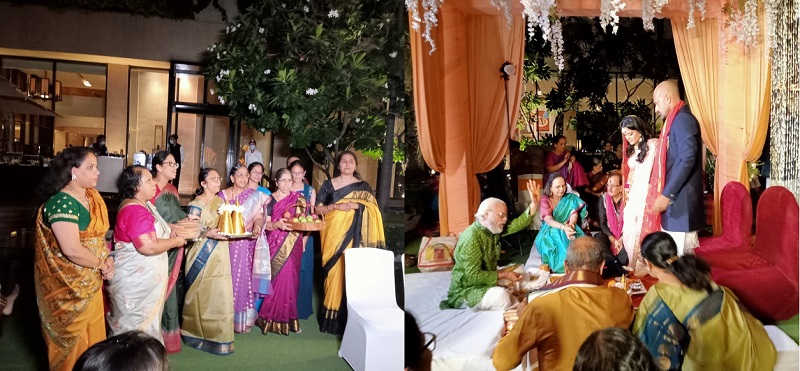 Amritha and I went to Hotel Vivant in Faridabad for Arun's wedding. The marriage was performed as per Arya Samaj rituals and we were struck by the fact that all rituals of an Iyengar wedding were present though slightly modified. The 5-star hotel ambience was extremely good. And we were all struck by the resemblnce of the Pandit to P.M. Modi. Amritha and I went to Hotel Vivant in Faridabad for Arun's wedding. The marriage was performed as per Arya Samaj rituals and we were struck by the fact that all rituals of an Iyengar wedding were present though slightly modified. The 5-star hotel ambience was extremely good. And we were all struck by the resemblnce of the Pandit to P.M. Modi.
The Great Saints
As we were comfortably travelling by the innova car, I thought of the four great saints who had travelled this route many centuries ago. It is a wonder that Adi Sankara (8th century), Periazhwar (9th century), Tirumangai Azhwar (9th century) and Ramanuja (11th century) could go to these inaccessible places. They must have been primeval forests in those times. It is beyond our imagination thay they not only went to these places, but established traditions that will live for ever.
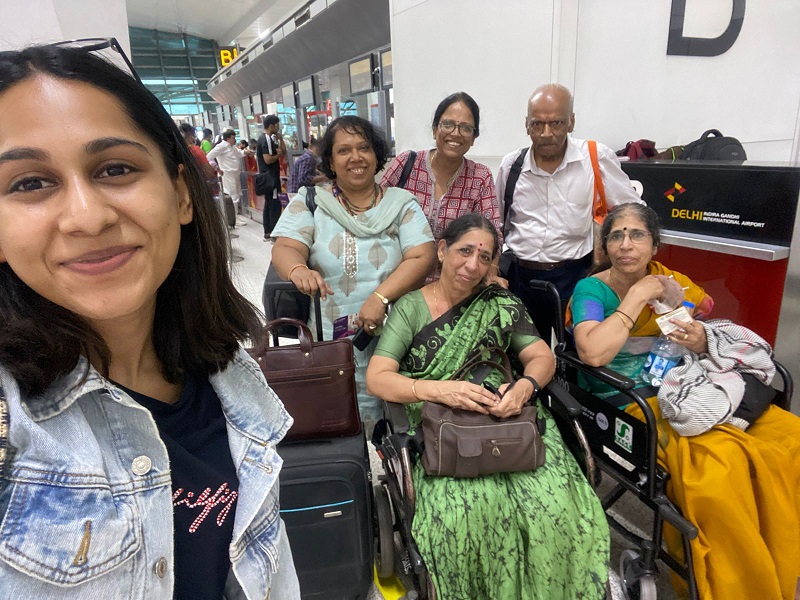 It was a pleasant surprise to meet Radha and Srinidhi in New Delhi airport. But they were shocked to see Amritha and Hema in wheelchairs. Hema had severe leg-pain due to all the climbing for four days. Amritha felt very weak and could not have walked all the way to and from the plane. But whatever discomforts we felt were not even a fleabite compared to what the great saints must have undergone. With that humbling thought, I bow to them and say Jai Badri Vishal as we land in Bangalore. It was a pleasant surprise to meet Radha and Srinidhi in New Delhi airport. But they were shocked to see Amritha and Hema in wheelchairs. Hema had severe leg-pain due to all the climbing for four days. Amritha felt very weak and could not have walked all the way to and from the plane. But whatever discomforts we felt were not even a fleabite compared to what the great saints must have undergone. With that humbling thought, I bow to them and say Jai Badri Vishal as we land in Bangalore.
S.Parthasarathy
September 2022
Click for Part-I of this Article (Temples visited in 2022)
Click for Part-II of this Article (Naimisharanyam & Ayodhya)
BACK to the Main Page
|
)
)
)
)
)
)
)
)
)
)
)
)
)