Many women are achieving targets not dreamt of by their predecessors, says KAUSALYA SANTHANAM, in her article in The Hindu dated 18th February 2006.
This was a city once so conventional that women felt constrained to play tennis wrapped in full six yards of the sari. Where swimming competitions for women were held away from the male gaze. Where women rarely ventured into unconventional areas of sport. No longer. With the Government instantly rewarding success with substantial sums, girls turning professionals and parents more than willing to see their daughters excel, it is halcyon time for the skilful and the strong in sports; they have entered the less traditional areas too — squash, rowing, football, golf and bowling. Still, there are hurdles...
"When I began playing tennis as a girl of 15 in 1955, there were very few women players," says Lakshmi Mahadevan, who was coached by Ramanathan Krishnan's father T. K. Ramanathan and became the Asian champion and India No. 1, in 1964. "When we played there was no cut throat competition. We had to use our own money for travel. The prize money used to be Rs. 200 to Rs. 300 and a small trophy! And yes, there was a gender bias. The All India Tennis Association never sent women out of the country for they felt they would quit once they got married. The Seventies brought about a sea change," says this vice-president of the Tamil Nadu Tennis Association.
As for snide remarks from the men about the woman's game, "I never got any." Women players definitely get more publicity than the men, says Lakshmi. The view is seconded by chess Grand master Aarthie Ramesh and the wizard of the track Shiny Wilson. Says Aarthie: "The prize money is comparatively less for the women because there are fewer sponsors. But women are at an advantage because there is less competition." Why are there only a few women coaches?
"I guess former women players just settle down to married life (whereas men turn coaches)," she says. "Before my marriage, I used to work with Ramesh who is a grandmaster. Pregnancy brought a break in my career. But the break has helped refresh me."
There are far better facilities for women athletes today and the prize money is much more, says Shiny, who has participated in four Olympics and won numerous medals at National and international meets. "When I had to go to Patiala to participate in a national meet, I remember my father seeking out other women athletes because he felt a girl should not travel alone."
Any gender bias? "Women were doing very well during my time — P.T. Usha, Valsamma and others were bringing gold to the country," says Shiny. At the junior level, women in all the Southern states are doing well, says this selector in athletics for the Indian team nominated by the Government of India. But she regrets athletes in India do not win as much fame as cricketers or tennis players; glamour too plays a role.
The Government, however, recognises the services of women athletes, says Shiny who has received the Padma Shri and the Arjuna award.
Shilu Ranganathan, one of the founder members of the Tamil Nadu Women's Cricket Association, is proud "the Indian women's team has played in five World Cups. Founded in 1975 during the International Women's Year, it is now No.2 in the world. But all over the world, including Pakistan, the men's Cricket Board has taken over women's cricket and it is professionally managed. Only here we have not been accepted by the Board because there is a prejudice that `cricket is a man's game.' One of the problems that affects women's cricket is lack of infrastructure facilities, especially grounds for coaching the players. Though more girls are coming forward to play, the game does not attract enough sponsors, spectators or publicity."
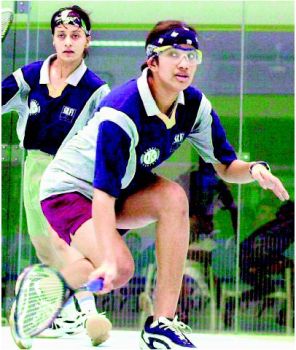
Joshna Chinappa is the reigning queen of squash. "Since squash is not such a big event, there is not as much publicity or money for it as for say, cricket. And since the men are aggressive and strong, everyone likes to watch the male players more," she agrees. "The Government does give a lot of money to federations but the women players don't get to see much of that. If more money is given we can train abroad and get a competitive edge." At the international level, there is no other Indian woman player except Joshna in the circuit today. "But I'm still in the process of making it to the top," she points out.
Many women in sports are achieving targets undreamed of by those who went before them. And often the men — fathers, husbands and coaches — are doing all they can to help them soar.
KAUSALYA SANTHANAM
From The Hindu dated 18th February 2006