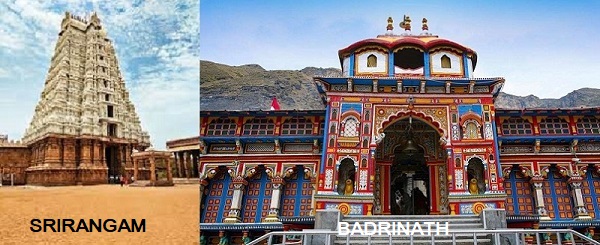
I might have heard the term Divya Desam in my younger days, but it registered in my memory only in 2002 (after I moved to Chennai from Mumbai). I was always fascinated by the mysticism of the number 108 and started learning more about Divya Desams. The phrase literally means Divine Realm. Lord Vishnu is in different forms and the form in which humans can worship him is as deity (Archavatar). The deity may have appeared on its own or may have been installed by other Gods or may have been described in the Puranas or installed by sages or installed by kings /devotees. The term Divya Desam was coined to indicate the deities in places about which one or more of the 12 Tamil Vaishnavite saints (known as Azhwars) have sung. There are 108 such places, two of which are Paramapadham and Ksheersagar which cannot be visited in the human form. This article is about some of the remaining 106 places. There are a number of ways in which Divya Desams are classified, but the most common is the geographical classification.
• Chozha Nadu (Chola country– Tamil Nadu) - 40
• Paandiya Nadu (Pandya country – Tamil Nadu) - 18
• Malai Nadu (Hill country – Kerala & Tamil Nadu) - 13
• Nadu Nadu (Central country – Tamil Nadu) - 2
• Thondai Nadu(Pallava country – Tamil Nadu) - 22
• Vada Nadu (Northern country - A.P., Gujarat, U.P, Uttaranchal & Nepal) - 11
• Celestial Abodes-2
Total Divya Desams = 108
In October 2002, I made a website on Divya Desams. At that time there were only a few websites. But now there are many that provide all types of info. My site was a very basic site about each temple. I have not updated it either. You can visit it by clicking here.
Devotees visit Divya Desams for a variety of reasons. I like to have a target in many things that I undertake. When I started enjoying Carnatic music from 2002, I had a target of writing a book on Carnatic Music for laymen, which was achieved through two books in 2003 and 2004. When I started compiling Tamil cryptic crosswords in 2009, I had a target of compiling at least 100 crosswords. I was glad that I could compile 140 crosswords (with over 2000 clues). Setting targets and making efforts to achieve them make life more meaningful and interesting. The satisfaction of achieving a self-imposed target is far greater than achieving targets set by others. Thus, the journey of 106 specific temples began with a visit to the most-sung temple, Srirangam in 2003 and completed with a visit to Badrinath in 2022. By the end of 2004, Amritha and I could visit 98 temples (including Tirumala). In 2005, we visited Ahobilam as well as Mathura and Gokul. I must accept that I had visited Dwaraka and Badrinath in 1994, much before I knew of Divya Desam. But counting them in, we had visited 101 Divya Desams by 2005 and had to wait for almost ten years to visit Muktinath. It took us another seven years to complete the target.
I visit temples because they give me positive vibes. I have had several spiritual experiences while visiting temples. My tours to Divya Desams took me to other famous and not so famous temples nearby. As there are too many to count, I shall write about a few instances. I cannot forget the pious old man of about 90 in Terazhundur. His knowledge and the way he talked made us fall at his feet and take his blessing. I cherish the experience of evening Aarthi in Nellai Kanthimathi Amman sannidhi. The visit inside the Gopuram of Brihadeeswar temple was awe-inspiring. The sculptures in Krishnapuram temple in Tirunelveli were out of this world.
In this article in three parts, I shall talk about my trips to the five Divya Desams visited by me in 2022. This part is only about the five temples. All other aspects of the travel and photographs are in Part-II and Part - III.
Ayodhya and Naimisharanyam (visited in August 2022) are ancient, sacred places for all Hindus. Ayodhya along with Mathura, Maya (Mayapuri or Haridwar), Kashi (Varanasi), Kanchi (Kanchipuram), Avantika (Ujjain) and Dwaravati (Dwaraka) are the seven cities that are called Mokshapuri. It is said that in the four yugas there were four places for pilgrimage. In Satyuga it was Naimisharanayam, in Treta yuga it was Pushkar, in Dwapara it was Kurukshetra and in Kaliyug it is Ganga. Both places are even more special to Iyengars as they are among the 106 Divyadesams mentioned by Azhwars in the Divya Prabhandham. With Raghu, Chandra and Hema also keen on visiting these places, I started planning the trip in July 2022. Both these are equidistant from Lucknow which is well-connected from all parts of India.
Initially we thought we could visit these before attending my grand-nephew’s marriage in Faridabad on 7th September 2022. But the dates did not suit Raghu and Chandra. After a few consultations we decided to go to Lucknow from Chennai on 24th August and return on 27th August. The starting point was Chennai as the cheapest direct flight to Lucknow was by Indigo Airlines from Chennai. I had taken up the responsibility of organizing the trip.
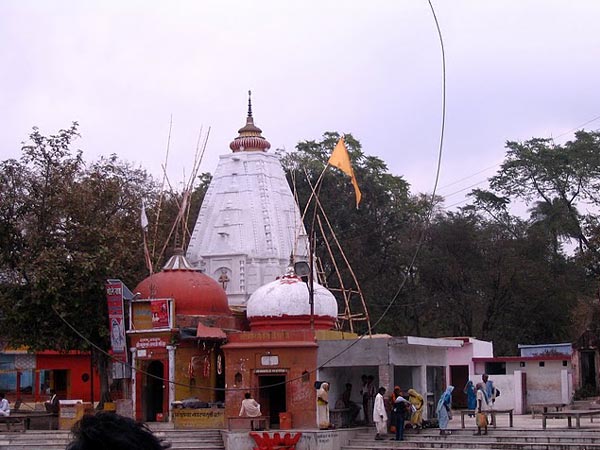 Naimisharanyam (25th August 2022) about which Tirumangai Azhwar sang, was a forest which is not existing in the same form. It is believed that the sages are still present as trees. The Divya Desam temple of Lord Devaraja was built much later. Naimisharanyam, like the other six cities mentioned earlier, is a city of temples, old and new, small and big.We were busy visiting many of these that we almost missed the temple for which we had gone to Naimisharanyam. All’s well that ends well. We had darshan of Lord Devaraja (Sri Hari) and recited the Pasurams on Him. This visit was topped up by very tasty lunch in the house of the Bhattar at Brindavanam of a Jeer of Ahobila Math, who are constructing Uttara Ahobilam there.
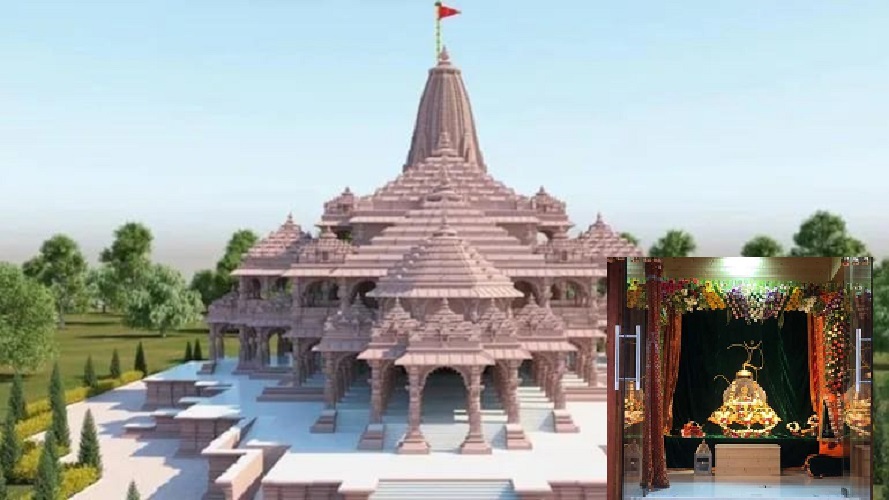 Ayodhya (26th August 2022) is one of the seven sacred cities mentioned earlier. As Ramjanmabhoomi, it has been celebrated in countless hymns. Like Naimisharanyam, the temple about which five Azhwars have sung 13 pasurams may not exist today. But the famous Ram Lala has been installed in a secure place and a grand temple for him is under construction. The model is displayed in Ayodhya (see photo). We could only walk by Ram Lala (inset in photo) and worship Him from a distance as the security is very tight. But we sat and recited the pasurams in the temporary temple built where a workshop has come up to enable construction.
After attending Arun’s wedding in Faridabad on 7th September 2022, we visited the three Divya Desams in Uttaranchal.
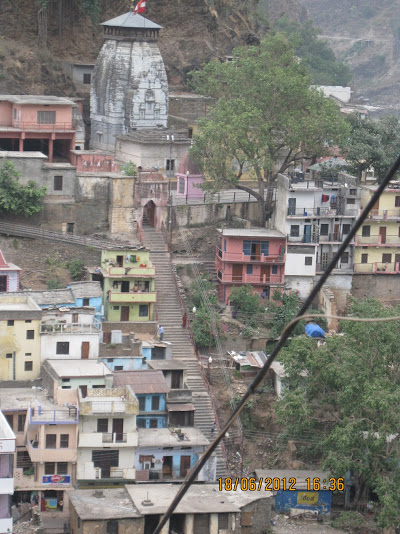 Devprayag (8th September 2022) was the next Divya Desam we visited. This has been referred to as Kandam Kadinagar by Periazhwar – Kandam is Bharata Kandam (India) and Kadinagar (excellent place). Periazhwar’s Purudothaman is known as Shri Raghunathji locally. We sat in front of the deity and recited the pasurams. While coming down the steps, we were trying to count the steps (see the photo). Another pilgrim told us , 'Do not count. Just keep chanting Ram Naam for each step. From the ground to the inside of the temple you'd have completed a 108-mala of Ram Naam.' Yes, there are 108 steps.
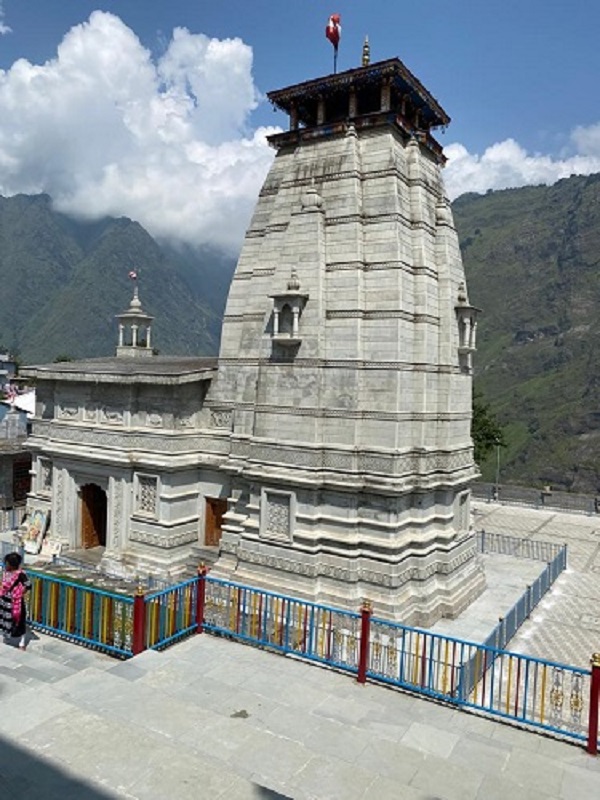 Joshimath (9th September 2022) was the next to be visited by us. This has been sung as Tiruppirithi by Tirumangai Azhwar – Pirithi might have been derived from Preethi (endearing). There is a belief that the place about which Tirumangai Azhwar sang is near Manasarovar and cannot be visited. For the last several decades, Joshimath’s Narasimhadev (established By Adi Sankara) has been accepted as Tiruppirithi Divya Desam. Along with the central Narasimha deity, the temple also has an image of Badrinath We spent over an hour reciting pasurams and talking to the priest. According to him, this temple is also called as Narasingh Badri and is closely linked to the Bhavishya Badri legend, It is believed that one arm of the image is getting emaciated with time and will finally fall off. When the arm disappears, Nara and Narayana mountains will come together and the main shrine of Badrinath will be closed to the world and Lord Badrinath will shift to Bhavishya Badri shrine. With this cataclysmic event, Kali Yuga will end ushering in the Satya Yuga. Then Badrinath shrine would get re-established.
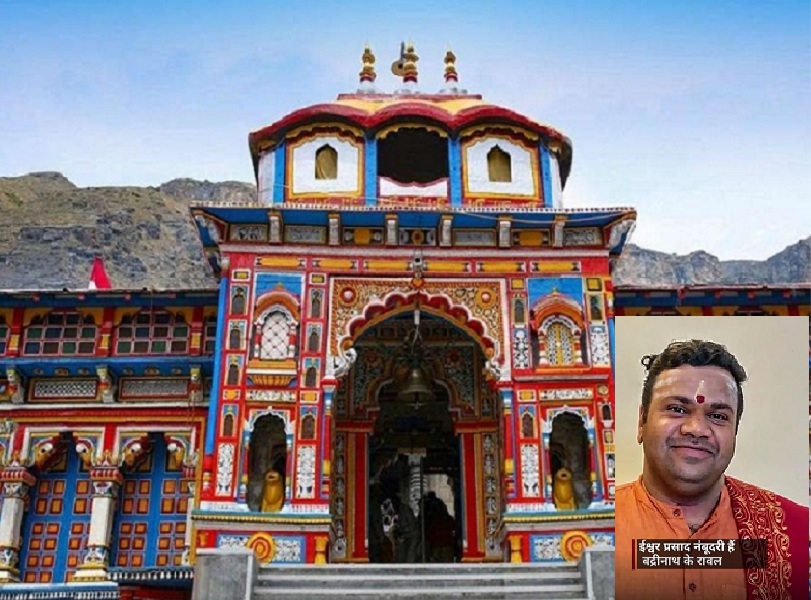 Badrinath (9th & 10th September 2022) was the last Divya Desam visited by us. Badri has been referred to as Tiruvadari by Periazhwar and Tiruvadari ashramam by Tirumangai Azhwar. The temple is situated between Nara and Narayana mountains on the banks of River Alakananda.It is said that the present idol of Badri Narayanan was recovered by Adi Sankaracharyar in 8th century from Tapta Kund and was installed by him. We stood in the queue and had a darshan on 9th evening and witnessed the the special Maha Abhishek Puja on 10th morning. You have to report at 4.30 AM to the temple and get to sit in front of the Lord. The chief priest (known as Rawalji), is Ishwar Prasad Namboodri (inset in the photo), is a descendent of the Namboodris appointed by Adi Sankara. He performs the abhishekam, alankaram and Aarthi, all in front of the devotees. The tradition in South Indian temples is to perform the Alankaram behind the curtains. Commentary in Hindi and recitation of slokas are broadcast. The whole process takes over two hours from 5.15 AM. There are about 15 deities inside the garbagriham, all of which you get to see clearly. It was a divine experience and a fitting finale to our Divya Desam yatra that began in 2003.
S.Parthasarathy
September 2022
Click for Part-II of this Article (Lucknow Trip - Impressions & Photographs)
Click for Part-III of this Article (Badrinath Trip - Impressions & Photographs)
BACK to the Main Page